
As the calendar turns and the “new year, new home” resolutions begin to circulate, our instinct is often to purge, polish, and perfect. We are conditioned to seek the flawless: the seamless countertop, the symmetrical gallery wall, the stark white minimalism that looks beautiful in a gallery but feels precarious in a life lived. However, a shift is occurring in the world of high-end interiors—a movement away from the sterile and toward the “soulful.”
This is the era of Quiet Luxury, and at its heart lies the ancient Japanese philosophy of Wabi-Sabi.
Wabi-Sabi is the aesthetic and spiritual appreciation of imperfection, impermanence, and the natural cycle of growth and decay. In the context of the modern home, it represents a departure from mass-produced uniformity. It is the art of finding beauty in a weathered wooden table, a hand-crimped ceramic bowl, or the way sunlight hits a wrinkled linen curtain. It is not about “mess,” but about intention.
The New Definition of Luxury
In previous decades, luxury was defined by “more”—more shine, more gold, more status. Today, luxury is increasingly defined by “meaning.” A home is considered luxurious not because of its price tag, but because of its ability to provide a sanctuary from the digital noise of the outside world.
Integrating Wabi-Sabi into your living space requires a radical shift in perspective. You must stop seeing a scratch on the floor as a “ruined surface” and start seeing it as a mark of a home well-loved. This philosophy aligns closely with the principles of Biophilic Design, which emphasizes our innate human connection to the natural world. By bringing in raw, organic materials, we create spaces that feel grounded rather than staged.
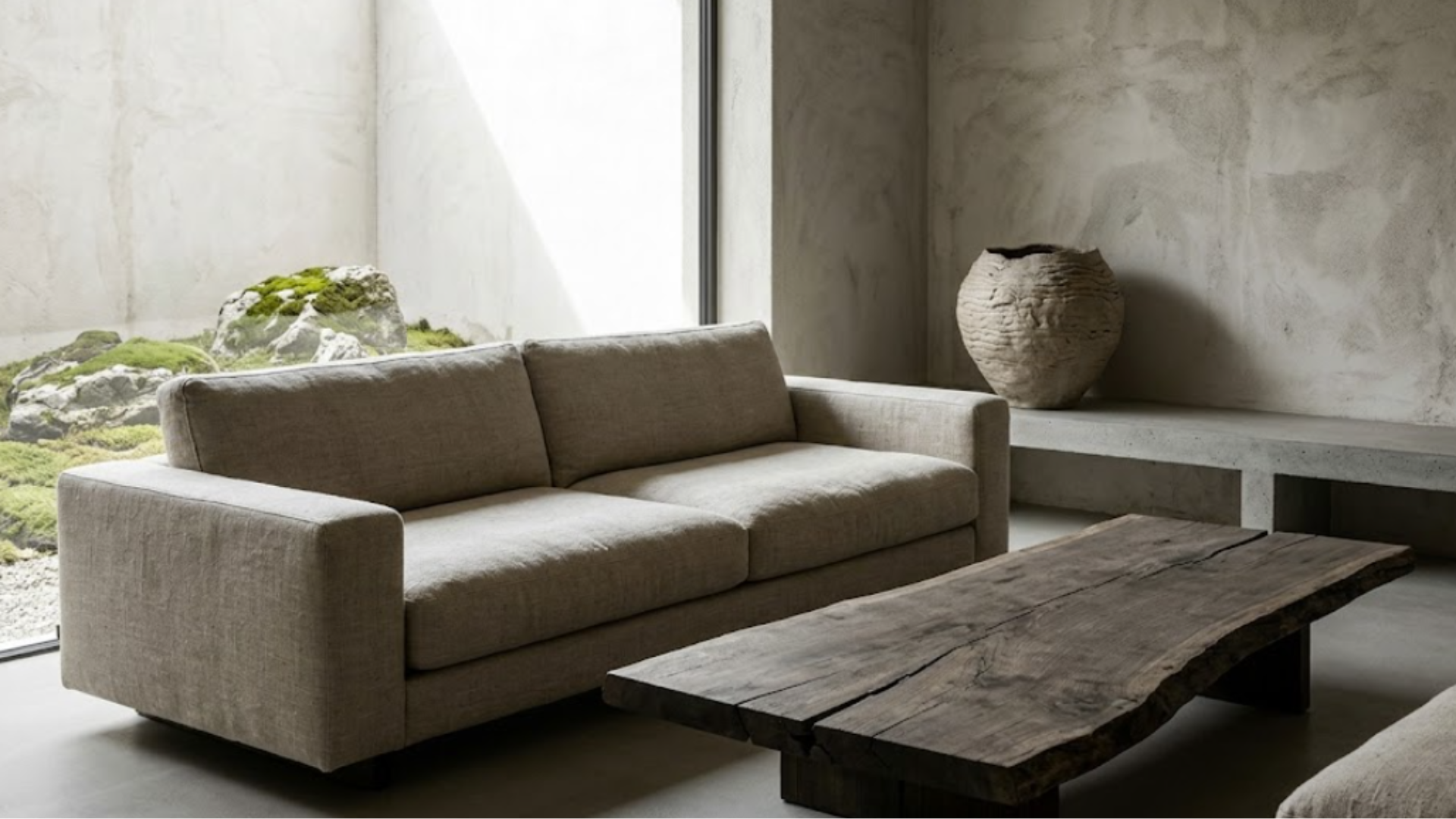
Starting the year with a Wabi-Sabi mindset means choosing quality over quantity. Instead of a fast-furniture overhaul, consider the “Quiet Luxury” approach: investing in one piece that will age beautifully over the next twenty years. The “Quiet Luxury” aesthetic, as seen in the textured walls and organic furniture of a Wabi-Sabi-inspired room, emphasizes a palette of “earth-tones”—clays, stones, and sand. These colors don’t just sit on the surface; they react to the changing light of the day, making the home feel like a living, breathing entity.
The Architecture of Authenticity
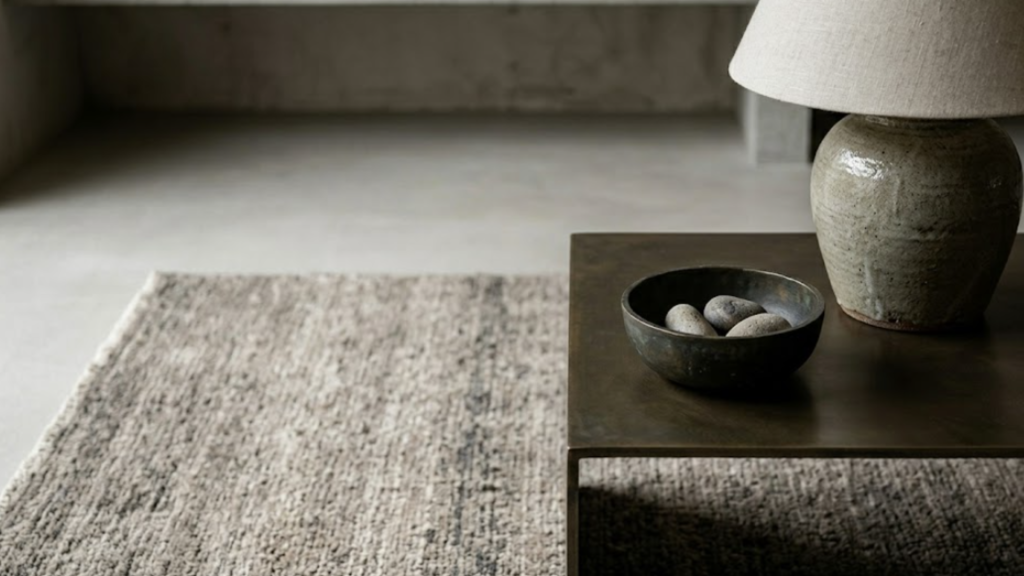
To bring Wabi-Sabi into the modern home, one must look at the “bones” of the space. It begins with texture. Flat, painted drywall is replaced with lime-wash or plaster, which carries the visible sweep of the artisan’s hand. Synthetic fibers are swapped for heavy linens, wool, and silk—materials that possess a tactile depth and a natural “give.”
This design trend is a direct response to the “perfection fatigue” caused by social media. When every image we see is filtered and airbrushed, the physical reality of a knot in a piece of oak or a patina on a brass faucet feels refreshingly honest. This is why many top designers are leaning into Sustainable Design Practices, focusing on reclaimed materials that already carry a history within them.
Wabi-Sabi also embraces the concept of Ma—the Japanese word for “negative space” or “the gap.” It’s the intentional emptiness that allows the few objects you do own to speak. A Wabi-Sabi home isn’t cluttered; it is curated. Each object is there because it serves a purpose or possesses a “silent beauty.”
Curating the Imperfect Table
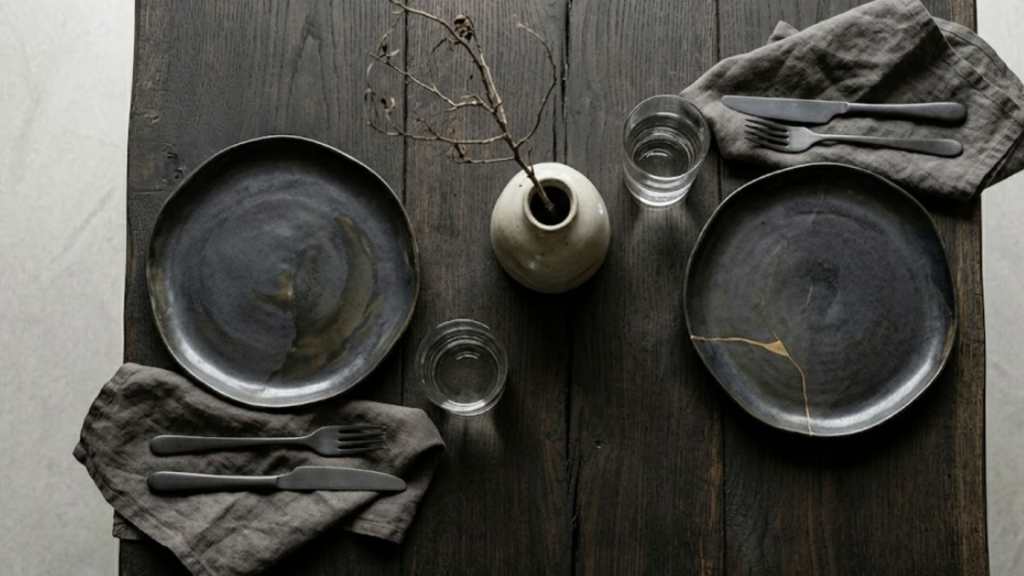
The kitchen and dining areas are perhaps the easiest places to begin your Wabi-Sabi journey this year. Moving away from the matching 12-piece porcelain sets, we find luxury in the unique. Hand-thrown ceramics, with their subtle variations in glaze and weight, turn a mundane Tuesday night dinner into a ritual of appreciation.
The beauty of these objects lies in their “kinship” with the earth. When you hold a bowl that feels slightly uneven, you are connected to the hands that made it and the clay it was formed from. This connection is the ultimate luxury in a world that is becoming increasingly automated.
The act of “curating the table” is a form of daily meditation. It’s about noticing the way a linen napkin softens after every wash, or the way a wooden board darkens as it absorbs oils over time. This isn’t just about “style”; it’s about a lifestyle that values the passage of time rather than fearing it.
Intentional Living for the New Year
As we plan our homes for the year ahead, Wabi-Sabi offers a more sustainable, peaceful alternative to the “trends” cycle. It invites us to stop “decorating” and start “inhabiting.”
When you embrace imperfection, the pressure to maintain a “show-home” disappears. You are allowed to have a stack of books on the floor. You are allowed to have a vintage rug with a slightly frayed edge. These are not flaws; they are the “coastal echoes” of your personal history.
In the modern home, Quiet Luxury is the ability to walk into a room and feel an immediate sense of lowered heart rate. It is the soft light hitting a textured wall, the comfort of a lived-in chair, and the quiet confidence that your home does not need to be perfect to be extraordinary.
Conclusion
The Art of Wabi-Sabi is a reminder that our homes are not just places to store things—they are the containers for our lives. By choosing materials that age gracefully and objects that tell a story, we create a space that supports our well-being and reflects our true selves. This year, don’t just clear the clutter; change your relationship with the objects you keep. Find the luxury in the quiet, the beauty in the broken, and the peace in the imperfect. Now that you’ve refined your physical sanctuary, explore our guide on creating a mental one through Digital Minimalism: How to Curate a More Intentional Online Life.
Leave a Reply